


.svg)
Who We Help at Imperial Healing House
Imperial Healing House works with adolescent girls ages 12–17 and their families who are navigating complex emotional, behavioral, and mental health challenges. Whether you have a diagnosis or just a gut feeling that something isn't right — you're in the right place.
What You Might be Seeing at Home
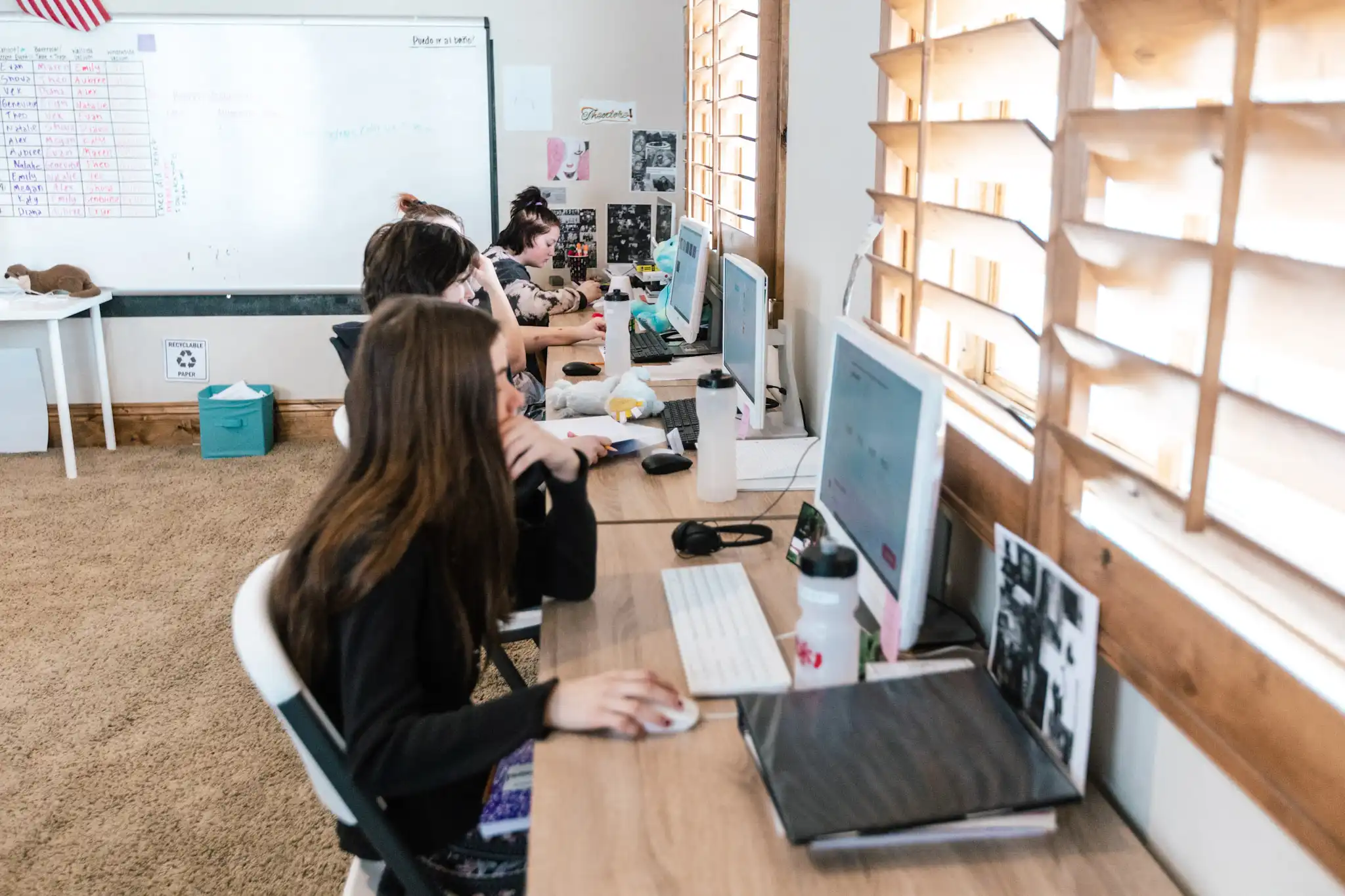
You might not have a name for what's happening yet. But you know something has shifted. Maybe it happened gradually — the withdrawal, the silence, the outbursts that seem to come from nowhere.
Maybe it happened suddenly — a crisis that turned your family's world upside down overnight.
Parents who come to us often describe seeing some combination of these things in their daughter:
She's withdrawn from friends, family, or activities she used to love
She's been diagnosed with a mental health condition but isn't responding to outpatient treatment
Her grades have dropped or she's refusing to go to school entirely
She's having emotional outbursts that feel disproportionate to the situation
She's experienced a traumatic event and hasn't been able to recover
You've found evidence of self-harm — cutting, burning, scratching
She's running away, sneaking out, or putting herself in dangerous situations
She's lying constantly, manipulating family members, or refusing all boundaries
She's using substances — alcohol, drugs, or misusing medications
How Do you Know When it's Time for More Help?
Every teenager has hard days. Mood swings, arguments, pulling away from parents — that's part of adolescence. So how do you know when it's crossed the line from normal development into something that needs professional intervention?
It may be time to consider residential or day treatment if:
Outpatient therapy isn't enough
She's been seeing a therapist — maybe for months or years — but she's not making progress. Or she's making progress in session but can't sustain it at home or school.
Safety is a concern
She's harming herself, expressing suicidal thoughts, running away, or engaging in dangerous behavior. You're afraid to leave her alone.
School has fallen apart
She's missing days, failing classes, refusing to go, or has been suspended or expelled. Academic life has come to a stop.
Your family is in crisis.
The stress of managing her behavior has become the center of your family's life. Siblings are suffering. Your marriage is strained. You're running on empty.
She needs a reset.
Her environment — peer group, social media, family dynamics, school pressure — is fueling her struggles. She needs a safe, structured space where she can step away from those triggers and do deep therapeutic work.
Previous treatment hasn't worked.
She's been hospitalized, tried PHP or IOP, or been in another program — and she's still struggling. She needs a different approach, not just a higher dose of the same thing.
What We Help Families Navigate
Our clinical team has deep experience working with adolescent girls facing a wide range of emotional, behavioral, and mental health challenges. Below are the conditions and struggles we see most often. Every girl is unique — and many are dealing with more than one of these at the same time. That's exactly what our individualized approach is designed for.
We also Work with Adolescent Girls Navigating:
If Imperial Isn't The Right Fit
During our admission interviews, if we flag behaviors or situations that need additional help, we'll connect you with other programs that may be better suited to your daughter's needs. We're in this work because we care about families. If Imperial House is not the right fit for your daughter's situation, we'll help you find solutions for healing.
Example Cases We Refer Out
In the interest of honesty and making sure your daughter gets the best possible care, there are some situations where Imperial may not be the right program:
Girls who pose an immediate, ongoing physical safety risk to other residents that cannot be managed within our home environment
Active psychosis or schizophrenia spectrum disorders requiring specialized psychiatric care beyond what our program provides
Severe eating disorders requiring medical stabilization
Primary substance dependence requiring medical detox
From past patients & parents
Testimonials
Our Blog
Discover more about the benefits of Residential Treatment Centers, the modalities used here at Imperial Healing House, and more.
.png)

